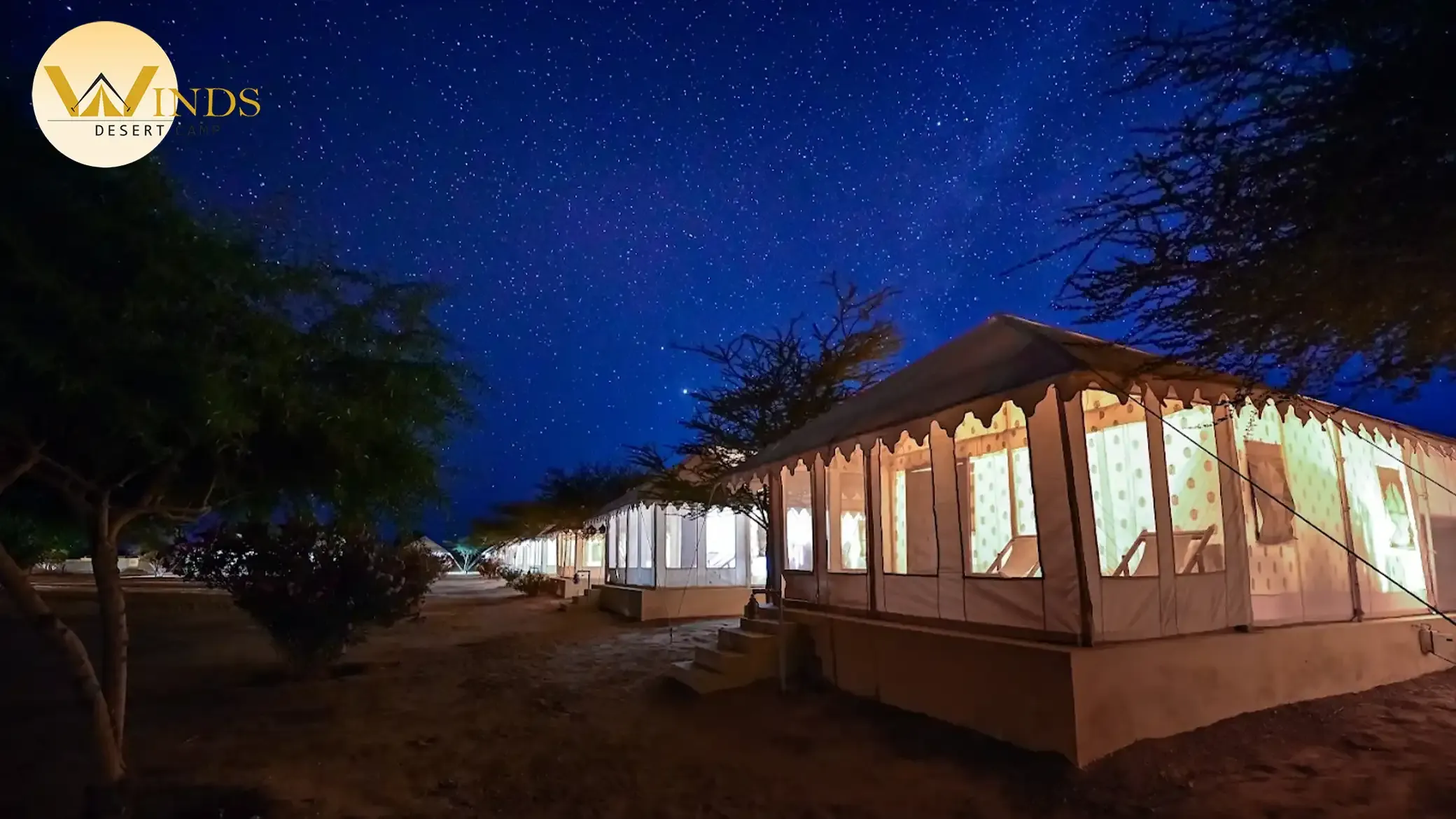
Every night, at the Sam Sand Dunes, roughly 35 kilometres out from Jaisalmer, there is a moment. The last colours of sunset fade from orange to purple to black. The desert wind drops. And then, the stars come forth one by one — first a few of them, then dozens upon dozens, thousands of them as far as anyone can see and all above the Thar Desert, they are blazing bright.
Stargazing in Jaisalmer is one of the most amazing things to experience in India, whether it's your first time taking this activity. No app, photograph, or description does it justice. You simply have to be there.
Well, here's everything you need to know in order to take full advantage of it.
A key thing that most people have no awareness of is that not all dark skies are the same. The Bortle Scale - a 1 to 9 rating where one is the darkest (perfect, almost impossible to find) night sky and where 9 is the bright white sky above a city centre.
The skies over the desert, especially closer to the Sam Sand Dunes Area in Jaisalmer, are classified as Bortle Class 3-4. Now, by Indian standards, that is not bad. On the other hand, Bortle 8 or 9 is where most cities in India fall. Hill stations themselves never go far below Bortle 5 or 6.
This means three things - extremely low population density along hundreds of kilometres of desert, nearly complete lack of industrial activity, and the dry desert air that prevents haze and humidity from scattering light.
You can experience nights where the Milky Way is clearly visible to the naked eye, satellites shoot across your field of view in real time and on particularly clear nights, you will see faint nebulae that most people have only seen photos of.
This is something no other guide tells you. The sky changes throughout the year, and knowing what to look for in the month you are visiting makes the experience far richer.
The Andromeda Galaxy appears in the northeast sky without the need for a telescope.
Orion, one of the easiest to identify constellations (even for beginners), is rising in the east by late November. Pleiades (the Seven Sisters star cluster) at a very prominent and beautiful
Orion is ever at its highest and most glorious.
Sirius, the brightest star in our whole night sky, shines bright and high to your south.
Jupiter usually appears as an exceptionally bright, steady star-like object.
These are termed the best months for stargazing anywhere in Rajasthan.
Leo and Virgo rise in the east after dark. The Milky Way core begins to become visible towards the south by late March.
Planets shift position.
The Milky Way core becomes dramatically visible — this is actually the best time to see the full arch of our galaxy stretching across the sky, though the heat is intense.
Depends on where you are; Jaisalmer in night offers two very different experiences.
The illuminated Jaisalmer Fort is one of the prettiest Jaisalmer night views you are ever going to find, as it glows gold in front of the dark sky within the city.
In fact, the honey-yellow sandstone of the fort lights up after dark like a fairy tale! Even strolling through the fort lanes at night to tune a desert wind filled with distance folk music is magical in itself.
However, to truly experience the night skies, you must escape your urban glow. The best starry skies near Sam are distant enough from the city (where camps like Winds Desert Camp, above, are located) so that the sky overhead is vastly darker. You can tell the difference the minute you step out of your tents and look up.
Choose the right moon phase. This is by far the most critical component. Starlit night in the desert on a full moon night is stunning, but rather vast peeks of neater stars and all over rinsed-out Milky Way.
On a new moon night, when the moon is completely absent, you will see the darkest sky, and you can admire an amazing view. Reference a free lunar calendar before booking.
Pick the right time of night- Sharpest after 9 PM with a darkening sky on the path to clearer skies. The Jaisalmer stargazing session is best experienced between 10 PM and 2 AM, as the sky will be darkest during these hours and most stars will be beyond the horizon for viewing.
Use a free app-Get Stellarium or Sky Map on your phone before the trip. Just point your phone at any bright thing in the sky, and it will tell you what that is — a planet, a star, a galaxy. It changes a passive experience to an interactive experience, and it allows you to find certain things that you want to see.
Let your eyes adapt-Human eyes need 20-30 minutes to adjust fully in the dark; So do not check your phone screen at this moment. Your night vision takes a bit to warm up, but it essentially doubles the number of stars you can see.
Dress for the temperature-Desert nights are cool, even in October and November. The temperatures consistently fall below 12 degrees after midnight. Bring your warm jacket and a light blanket to sit for an hour or longer outside.
One of the best places for stargazing in Jaisalmer, Winds Desert Camp is located on Khaba Road, Jaisalmer, near Sam Sand Dunes. With 500 feet of private dunes, this camp takes advantage of 3 acres of remote desert, meaning no neighbouring torches spilling into your sky. The private dune area gives guests a genuinely dark, uninterrupted horizon in every direction.
Once the guests have enjoyed an evening cultural folk performance and dinner, those staying at Winds can meander to the private dunes for as long as they want beneath the stars. The camp team is more than willing to simply show what is showing on any night, and the remote desert location — no traffic, no city noise, just wind and sand and stars- makes it a very tranquil experience.
Other packages from Winds Desert Camp include a stargazing experience with a camel safari, a candle light dinner and cultural evenings. The type of night you will spend a decade explaining to people who weren't there.
Ans. Yes — on a clear, moonless night between October and May, the Milky Way is clearly visible to the naked eye from the Sam Sand Dunes area. March and April offer the most dramatic views as the galactic core rises higher in the southern sky.
Ans. Between 10 PM and 2 AM is ideal. Give your eyes 20 to 30 minutes to adjust to the darkness before looking for fainter stars — avoid your phone screen during this time as it resets your night vision.
Ans. No. The skies are dark enough for an extraordinary naked-eye experience — thousands of stars, the Milky Way, shooting stars, and satellites all visible without equipment. A free app like Stellarium on your phone helps you identify what you are looking at.
Copyright © Winds Desert Camp. All Rights
