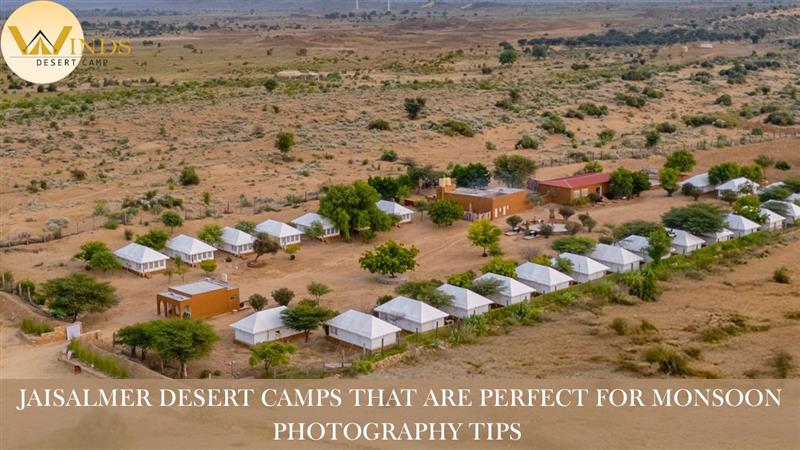
Thar Desert, the large desert around Jaisalmer is commonly known for the sizzling summer heat and winter tourism. However, little do people know about the beauty, which lies hidden in this desert during the rainy season. With the rains comes the transcendent changes, but all so subtle, the air becomes cleaner, the skies shift to a palette of broody clouds and the golden sands darken into deeper, richer colors. This season presents a unique and great opportunity to the photographer to capture the mood of the desert in a totally new attitude.
Most of the tourists prefer spending winter in the desert yet during monsoon, a calm and beautiful skyline offered is perfect to take pictures of landscapes or nature. In case you love taking pictures of nature in its uncivilized, lyrical form, visiting the Jaisalmer desert camps during the monsoon season might become the unforgettable experience that would produce your most unforgettable shots ever.
So why is the monsoon in Jaisalmer so special to the photographers? And how to make the most of it with monsoon photography tips.
The Unique Charm of Jaisalmer Monsoon
In comparison with central or the coastal regions of India, the monsoon in Jaisalmer is weak, patchy, and mild. You will not have days of rain but brief periods of showers with a picturesque sky with wind driven sands and a cool breeze about. This makes these simple alterations to add life within the lifeless desert.This is what monsoon photography in desert camps of Jaisalmer is or rather specializes in:
- Cloud drama: Multiple layers of clouds will fill the sky and make your frames more profound and emotional.
- Textured dunes: The jagged patterns and outlines on the sand are accentuated by light rain and thus it becomes more photogenic.
- Cold weather: Easy to shoot early in the morning and in the evenings.
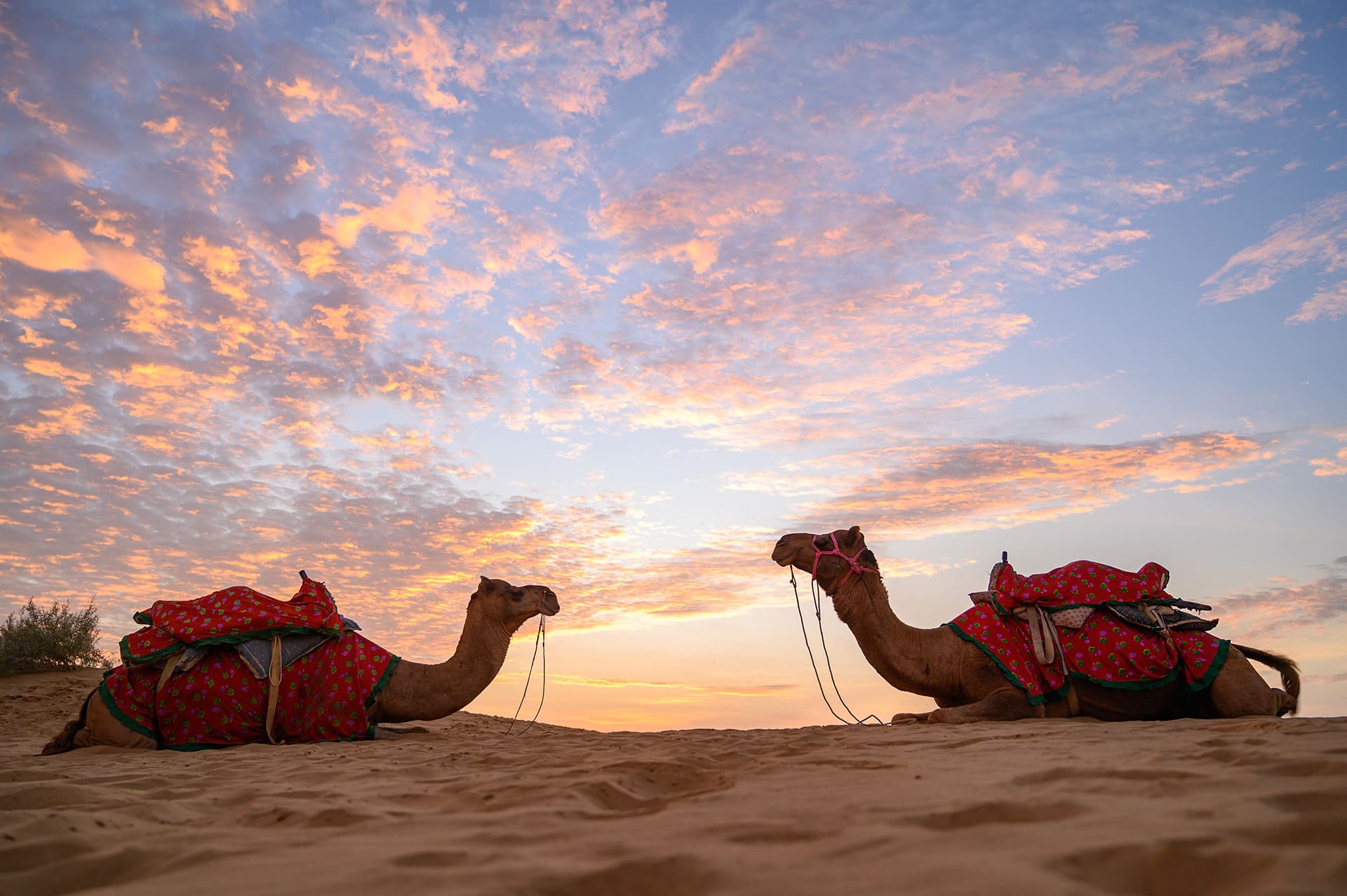
- Uncommon scenes: Puddles of clouds, clean footprints, camels outlined on grey skies.
All this will make you have a visual palette of nothing like the stereotypical sunny desert pictures
Selecting the Right Camp
Most of the Jaisalmer desert camps have similar features: tenting to stay at, camel rides and cultural night but the photographers must target the camp sites found:
- Near undisturbed dunes, and wide-angle clean shots.
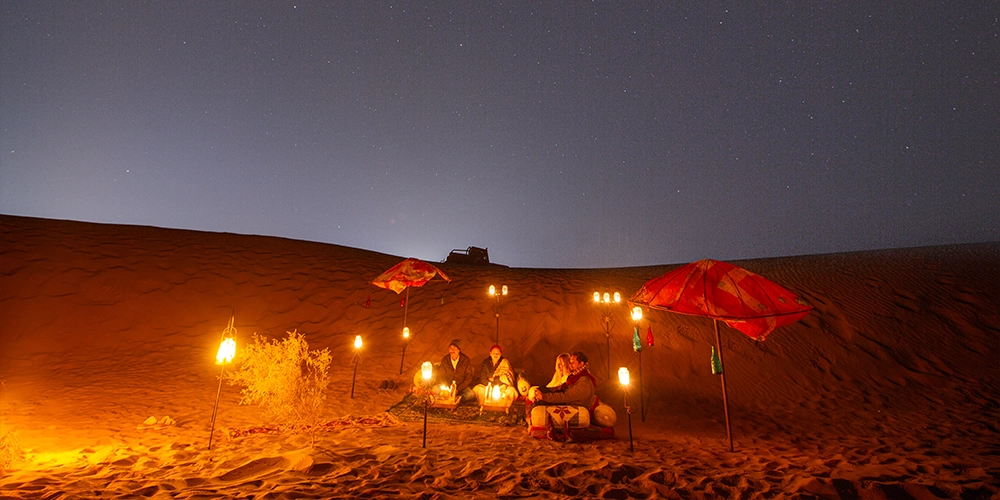
- Outside the city to play with low-light photography and shoot the night sky.
- And on elevated positions or dune ridges in order to gain panoramic views and alternating cloud patterns.
Search places that are not far away and attract untouched nature scenery. Overly commercial camps can feature an overcrowded environment and too isolated ones can prove to be challenging in rainy conditions. It has to be a compromise between your comfort and creative objectives.
Desert Desert tips on monsoon photography
The monsoon shooting in the desert is a matter of thinking and a wide choice of equipment. These are the most tested monsoon photography tips that should guide you to take the best advantage of the season of rains.
Cloud Play embraced
Wait not to get clear skies. The actual magic comes in the clouds. Employ wide-angle shots in order to embrace the vastness of the desert behind veils of passing clouds. Symmetry-Play: a frame is split between sky and land in half by the horizon. To bring out contrast in clouds use a polarizing filter.
Golden Hours Shooting
Monsoon monsoon might be a problem, particularly when it is the overcast kind. Attempt to shoot early in the morning or before the sunset time in the day when sun rays penetrate through the holes in clouds. This makes it smoothly diffused and brighter making the colors stand out and the photos more magical.
Make Reflections work
Even the desert gets temporary puddles because of rain. Such puddles are a goldmine to photography and you can have a shot at making symmetrical, tale-telling shots as the puddles reflect the sky, camels, dunes or even tents. To make everything more reflective, take the shots in a low position.
After Rain Capture the Details of Sand
Due to rain, the texture of sand is brought up to the surface. On dunes downstream, you will see clear wash lines, wash surfaces or even water tracks. Get a macro lens or zoom in to take these details. Such shots will be wonderful abstract or mood photos of your series.
Add In Movement and Local Life
Silhouettes of the camels, footprints in the wet sand or local people walking with their turbans floating in the wind add life to your shots. Monsoon winds tend to make things quite emotional and hence by using a low shutter speed along with monsoon winds, one might be able to generate a dramatic feel of motions.
Use the Natural Light
Take advantage of natural light. An overcast sky is a large soft box which will diffuse light and eradicate harsh shadows. This is ideal to be used when taking photographs of portrait, camps, or camel safari in soft and even tones.
Protect your Equipments
The desert is humid, and dust combined with rain may damage your equipment even though the rain came mildly. Make use of the following:
- Zip-lock camera rain covers or zip-locks
- Lens wiping microfabrics
- Silica gel in your camera bag
- Lenses that are weather-sealed where available
Have a towel with you and change lenses in closed spaces so as to avoid dust particles or water going inside your body.
Black White Experiments
All pictures do not necessarily require colorization. The dark skies, the depth of textures and high contrast of the monsoon mood lends itself to effective black and white photographs. You can make some shots black and white and notice how the desert gives another story.
Write to Atmosphere, not a Landscape
Monsoons are not so much about vivid colors and more about the emotion. To make an impression of mood, mystery or solitude use leading lines, negative space and isolated subjects. Consider what the weather causes you to feel and put that into your frame.
Slow Getters Never Rush it, Watch and Wait
The monsoon photography is about waiting. Wait until the clouds get into position, or the light changes, or the tent flaps rustle with the wind. Rest, and suffer the scene to change. It is in these instances that you patiently wait thinking that this is the best chance you could ever have before you see a good shot.
Conclusion
This desert terrain of Jaisalmer has a magic persona in the monsoon months, which is crude, uncertain, and very image-friendly. To have an experience of this beauty once upon a time, you should select Camp In Jaisalmer to use as your base camp so that you can soak through the rare beauty and get pictures that are seldom found in compilation travel albums.
Monsoon in the desert is a good source of colors, textures, and moods, so subtle and profound that most photographers do not hesitate to use it to get out of the cliches. Armed with the appropriate attitude and equipped with these monsoon photography tips, not only would you end up capturing lovely images, but also end up experiencing the desert in a whole new way that few people do.