What would happen to a whole village overnight, and now it is a tourist goldmine on the chatter of ghosts and a curse 200 years old? Only a few miles away, Jaisalmer has Kuldhara Haunted Village, which is a deserted village referred to as one of the most mysterious locations in India. You are walking over the ruins of the houses and silent streets of Kuldhara Haunted Village as the walls are almost speaking. The villagers allegedly disappeared one night because of a huge curse, but some of them suppose that it was a premeditated flight against injustice. Today, guided tours and souvenir stalls have transformed this deserted ruin into a major tourist attraction. So what is the real history, folklore, or good marketing? We shall find out the facts, fiction, and reality in easy terms.
A Short Verifiable Story (What We Know)
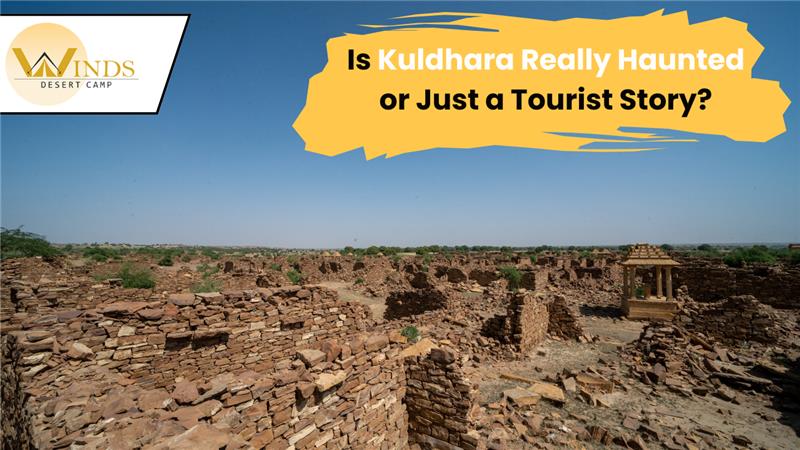
Kuldhara was a village, the main inhabitants of which were Paliwal Brahmins, and it is likely that they had been there since the Middle Ages. According to history and local histories, the settlement thrived for centuries due to intelligent desert farming and water management. One can still see the stone houses, temples, and step-wells today, which indicate a once-prosperous life.
By the first half of the nineteenth century, the site had been deserted. The way and the reason why people went is where history and legend diverge. Other documents and surveys characterize water shortage, shifting river streams, and financial strains as usual factors that render desert communities frail. The archaeological surveys and historians consider Kuldhara an unexplored heritage site that is being preserved and shown to the visitors.
A Dramatic Version: The Cursed Departure
The most common version is cinematic: at about 1825, Salim (or Zalim) Singh, a powerful minister, was on the one hand required to take a local girl or, on the other, to impose taxes that were unbearable. The villagers repudiated it; they loaded up their bags in a night and disappeared, leaving a so-called curse: no one should live here anymore. The 83 villages, midnight exodus, and a blood-curdling curse are added to the tale versions. It is that tale that is the core of the haunted village of Kuldhara, and which, on location, made the place a chilling legend.
This story is easy and emotional and has a viral appeal, which is what is wanted in travel books, ghost-hunting episodes, and tour operators. The best local guides and tourism articles reiterate it without explaining the extent to which it is folklore and how trustworthy it is.
How Earthquakes, Droughts, and the Economy Are Connected
Researchers have in the past few years argued in favor of natural causes. In 2017, a palaeoseismic survey (and an Indian newspaper report) discovered indicators that some Paliwal settlements around Jaisalmer depict evidence of structural failure that is in line with the presence of strong earthquakes and tectonic action, and not merely systematic evacuation. The drying out of wells and shifting groundwater patterns are also reported to be extremely convenient causes of migration in a desert. Such descriptions do not provide creepy campfire tales but have physical evidence.
Then, archaeological and geological data indicate that environmental stress and structural damage are likely to be the causes of abandonment. The overnight-vanishing version is probably a subsequent embellishment, a human manner of explaining something complicated that has occurred.
Paranormal Claims: Investigations and Contradictions
Paranormal researchers have toured Kuldhara and made sensational allegations about floating shadows, voices that have no bodies attached, and a sense of being stalked. Such reports have been heightened by Indian paranormal groups and by some television programs. However, these are anecdotal arguments that cannot be captured on record or through peer review. The man who frequently relates to the promotion of the paranormal tale of Kuldhara, Gaurav Tiwari (a well-known face in the Indian ghost-hunting community), also visited locations in India; his stories must be viewed as interesting but not evidence.
The Kuldhara village story is useful to draw tourists, as residents, shopkeepers, guides around Jaisalmer, etc., frequently claim. That is understandable: enigmatic stories make locations unforgettable. The official tourism websites market the site as a historical and/or tourism destination; one of the many threads on the site is the haunted aspect, which is intertwined with history, archaeology, and desert landscape.
What do the authorities say?
Kuldhara is a site maintained as an archaeological/historical site and offered as a tourist attraction by Rajasthan Tourism. The government promotes daytime tours; tours after sunset are usually discouraged due to safety and conservation reasons. That policy adds to the haunted atmosphere; you are not allowed to come to Kuldhara at night, so you have to imagine what is going on. However, in the official sources, it is heritage that is stressed and not hushed ghost warnings.
So Haunted or Not?
Concise answer: “Unless it is the supernatural sense.
Prolonged response: Kuldhara is true simultaneously in many ways:
- It is a fact of history: an abandoned village of Paliwal Brahmin centuries ago.
- It features a strong and enduring haunted legend, the curse and nocturnal exodus, which is folklore that has been dispersed due to its drama and catchiness.
- Scientific and archeological evidence points to environmental pressure (lack of water, failure of groundwater) or some earthquake-induced damage that would have caused abandonment devoid of curses.
- Paranormal claims are there but unproven; they are entertaining to believe, but not as evidence.
And when one asks whether the village of Kuldhara is really haunted, the level-headed traveller has to tell the truth, and that is that it is haunted as a legend, not as a fact.
Why the Myth Stuck (Why It Helps Tourism)
Stories that contain villains and abrupt conclusions are favored by people. The Salim Singh curse story is no exception. And then add the picture drama of sinking houses of sandstone, deserted courtyards and lanes blown with wind, and you have a complete invention of legend. In the case of Jaisalmer attractions, this is an asset: heritage and mystery are the favorites of the tourists. The ghost myth remains alive thanks to the efforts of guides, blogs, and social posts, as it is fun, and it sells more desert tours.
Visiting tips (if you go)
- Go in the daytime; the location is most effectively investigated in the morning or in the evening when the light is low.
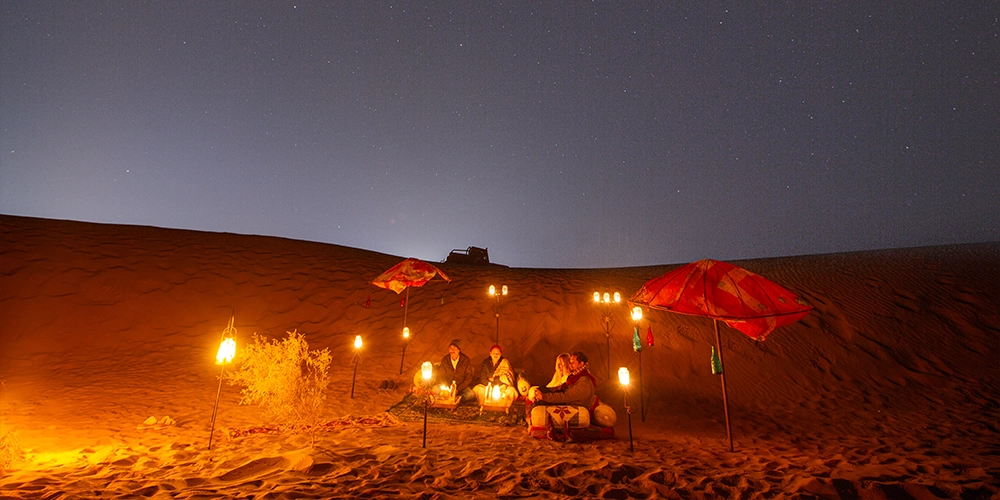
- Choose a desert camp for an authentic and cultural experience.
- Hire an expatriate guide who will provide you with history, legend, and useful safety tips. Guides usually possess numerous variants of the curse, which belong to local oral history.
- Still have respect for the ruins: they are frail. Only do not see on unsteady walls or take away the stones.
- Touring Kuldhara along with other Jaisalmer attractions, Sam Sand Dunes, Jaisalmer Fort, and the bazaars in the area completes a complete desert tour.
Conclusion
Kuldhara is one of such places where fact and fiction come together to enrich the place. The Kuldhara village haunted story is a sensational one insofar as you love spine-tingling stories. If you favor history and geology, you will find actual puzzles on desert life, water management, and the region’s tectonics on the site. In any case, it is a place worth visiting in Jaisalmer attractions because of the stones and inscriptions, partly because of the stories that human beings are so fond of telling.
FAQs
Why is Kuldhara considered haunted?
The fact that villagers had disappeared overnight centuries ago makes Kuldhara haunted, with residents claiming that the village is empty with no one around whatsoever. Local folklore, haunted tales, and unexplained events contribute to the haunted and creepy image of it.
Is it safe to visit Kuldhara at night?
No one is supposed to visit Kuldhara at night because it is not safe and there are strict regulations. The region is closed off at night and thus only available to tourists during the daytime.
What’s the entry fee?
Entry fee charged by Kuldhara is normally ₹20 in the case of two-wheelers, ₹50 for four-wheelers, and a fee per cap. The prices might fluctuate marginally, though generally, the site is affordable to the visitors.