The Golden City of Rajasthan, Jaisalmer, boasts of sand dunes, forts, havelis, and eternal beauty. Out of all the significant attractions of Jaisalmer , Gadisar Lake is not only one of the most beautiful places to visit but also a historical location that is alive. This lake is more than just a tourist attraction; it is a story of survival, smart planning, and artistic perfection in the very center of the Thar Desert. Gadisar Lake is where the history, architecture, culture, and life of the old Jaisalmer are silently blended.
The Story Behind Gadisar Lake
The Gadisar Lake history can be attributed to the 14th century. It was originally built by Maharawal Jaisal Singh, who used to be the founder of Jaisalmer, as a water reservoir. It was also restructured and extended further later in the 14th century by Maharawal Gadsi Singh, who gave the lake its current name. Water was life and not a resource in a desert city where Jaisalmer is located. Gadisar Lake was the main source of water for the whole city for centuries, and it was one of the most crucial developments that ever took place in the history of the region.
It is believed that the king diverted the water supply to this lake to place it in a better place and make it sustainable. The lake used to be closed to the outside, and there were strict regulations that were followed to preserve purity. This explains the extent of respect given to water management in ancient Rajasthan. Up to the present day, when you approach the lake, it seems like a sobering experience of how cultures can live under the harshest circumstances using wisdom and not luxury.
Architectural Beauty of Gadisar Lake
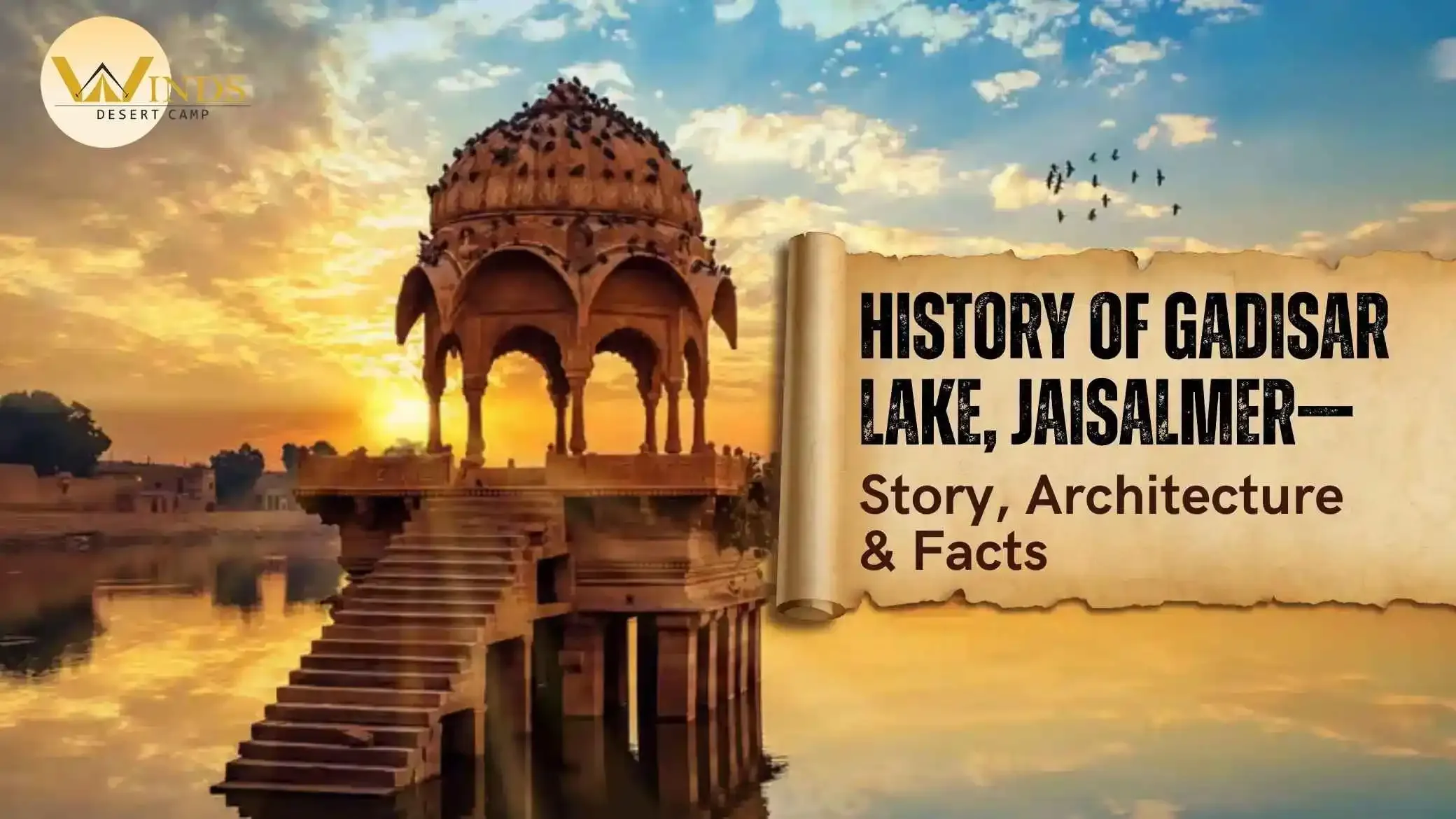
Gadisar Lake is not just a mere water body architecture-wise. It is covered with the fine stone-carved architecture of temples, shrines, ghats, and cenotaphs, which are representative of classic Rajput and Mughal influences and it is one of the Historical Places of Jaisalmer . The yellow sandstone on which the structures were made mixes so well with the green color of Jaisalmer in beautifully creating a color that varies with the sun. These structures are reflected in the water and contribute to its surreal beauty, which makes it one of the most photographed places and a great attraction of Jaisalmer.
The most recognizable one here is the Tilon Ki Pol, which is a well-sculpted gateway found at the entrance of the lake. This gateway was constructed by a royal courtesan known as Tilon, and the story surrounding it is very interesting. They say that the queen did not want it to be constructed, but Tilon was clever enough to erect an idol of Lord Krishna at the top so that it could never be destroyed. A combination of architecture, politics, and religion makes Gadisar Lake architecturally and culturally ecstatic.
Religious and Cultural Importance
Gadisar Lake has been a holy place all along. The lake has many temples of Hindu deities and goddesses, and this is still where rituals are conducted by people during festivals. Traders and pilgrims, who came into Jaisalmer in the past, would first take a bath and make a prayer at the Gadisar Lake before even entering the city. This tradition emphasizes the spiritual contribution of the lake in life.
To this day, such festivals as Gangaur and Chhath Puja attract locals to the lake in great numbers. This tranquility, the ringing of temple bells, and evening aarti together produce an impression of a strong image of tradition. It is this spiritual attachment that, among other things, makes Gadisar Lake a place of emotional significance to the inhabitants of Jaisalmer, rather than merely a picturesque site as aesthetically appealing to the tourists.
Gadisar Lake as a Tourist Attraction
Nowadays, Gadisar Lake is one of the most popular tourist destinations and the best attraction of Jaisalmer. This is where visitors go to do some boating and photography and enjoy quiet walks, particularly at sunrise and sunset. The golden light that bounces back on the water, including the fort in the background, is an experience that is unforgettable. The lake is a serene solace from the busy roads in the city, after which you remain in touch with the soul of Jaisalmer.
Like Jaisalmer Fort and Patwon Ki Haveli Jaisalmer, Gadisar Lake is also usually included by tourists in the same tour. Whereas Patwon Ki Haveli is the symbol of prosperity of the rich traders and their mode of living, Gadisar Lake is the sign of community living and wisdom of the masses. They all show a full picture of the historical and social organization of Jaisalmer.
Interesting Facts About Gadisar Lake
An interesting fact about Gadisar Lake is that it is an artificial lake located totally on rainwater. This not with standing, it was able to sustain the city over centuries. Migratory birds also visit the lake in winter, which makes the lake a silent haven for the bird watchers. In much of the colder regions, species may be observed floating quietly on its surface.
Another fact that is not well known is that there are a number of small islands present in the lake, which are surrounded by shrines and cenotaphs. Royal women or rich individuals often commissioned these structures and art, and the way of worship was inseparable. The design of the lake also contributed to the deterrence of evaporation of water, and this was a clever design given the desert weather.
Gadisar Lake in Today’s Jaisalmer
The Gadisar Lake is no longer a primary water resource, but it has not become useless. It has become a cultural icon, tourist destination, and heritage. To ensure it is not tainted and over-touristed, it should be conserved. The local government and community members know that it is an identity that is being conserved when Gadisar Lake is conserved.
Gadisar Lake can do more than provide nice photos to the travelers. It offers perspective. It informs you about the way cities used to develop around water, how architecture was guided by the goal, and how beauty was not independent of necessity. Combined with such monuments as Patwon Ki Haveli Jaisalmer, it makes a full story about a city that was constructed on the strength of endurance, art, and smarts.
Conclusion
Gadisar Lake is not only a lake, but it is also a core of the history of Jaisalmer. It has the royal heritage, its brilliant management of water, the magnificent architecture of the place, and its cultural applicability to its everlasting attraction of Jaisalmer. Visiting Gadisar Lake is as though entering the living story where all the ghats, temples, and water ripples talk of the past. When you come to know Jaisalmer in and out, then a lake named Gadisar is a starting point of knowledge.
FAQs
Q. Why does Gadisar Lake never dry up?
Ans.The Gadisar Lake hardly runs dry as it was built to act as a rain water pool with a vast catchment area, intelligent depth planning, and very low evaporation that is appropriate in the desert environment.
Q. What are the visiting hours?
Ans.Gadisar Lake is available day by day starting at early morning of 6 AM till evening up to 8 PM, and the sunrise and sunset are the calmest and most beautiful hours.
Q. What activities can I do at the lake?
Ans.One of the primary attractions of Jaisalmer can be enjoyed as visitors sail, capture photographs, watch birds, take pleasant walks and have a glimpse of the sunset and visit the temples and ghats in the nearby area.