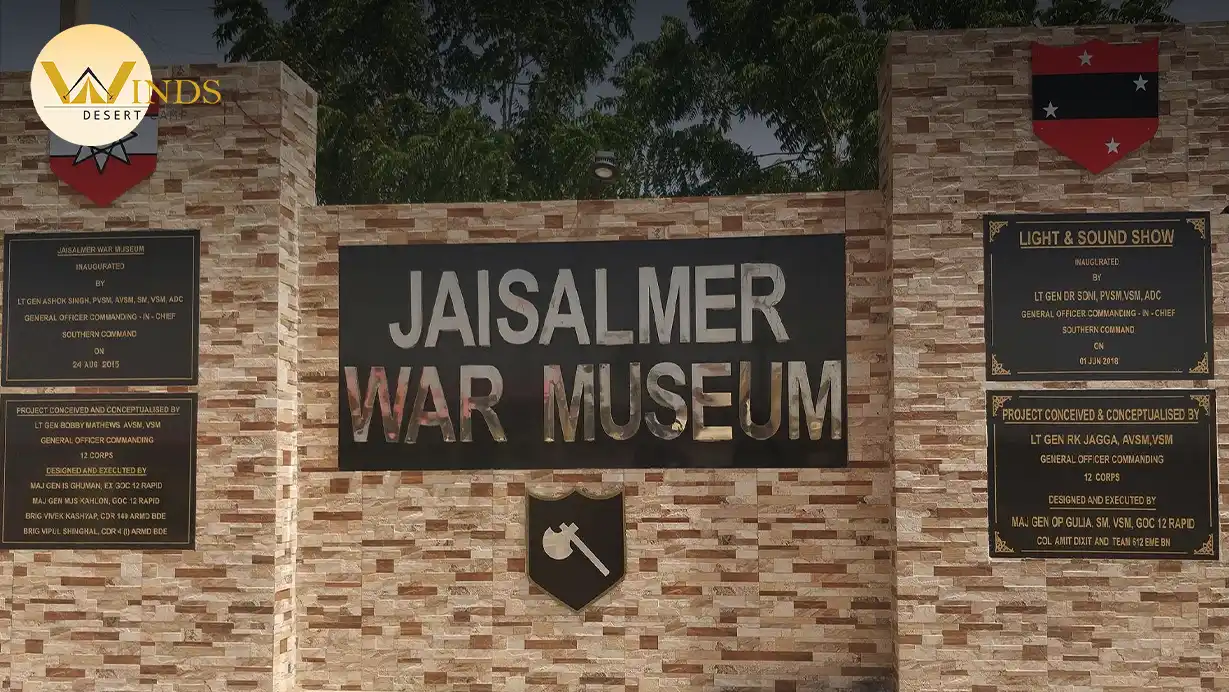
The Jaisalmer War Museum is an Indian Army-managed military heritage site located approximately 10 kilometres from Jaisalmer city on NH-11 (Jodhpur Highway), inaugurated in August 2015 to honour the soldiers who fought in India’s western desert conflicts, particularly the 1965 and 1971 Indo-Pakistani Wars and the legendary Battle of Longewala. It houses tanks, aircraft, artillery, personal relics, and an audiovisual hall, and offers visitors the chance to see military equipment, war trophies, and aircraft associated with India’s military history, alongside displays explaining the Battle of Longewala and the 1965 and 1971 wars. (Source: Link) For anyone visiting Jaisalmer, especially those staying at a Jaisalmer Desert Camp near the Sam Sand Dunes, this is not an optional stop. It changes how the desert looks on the drive back.
The Battle of Longewala: The Story Behind the Museum
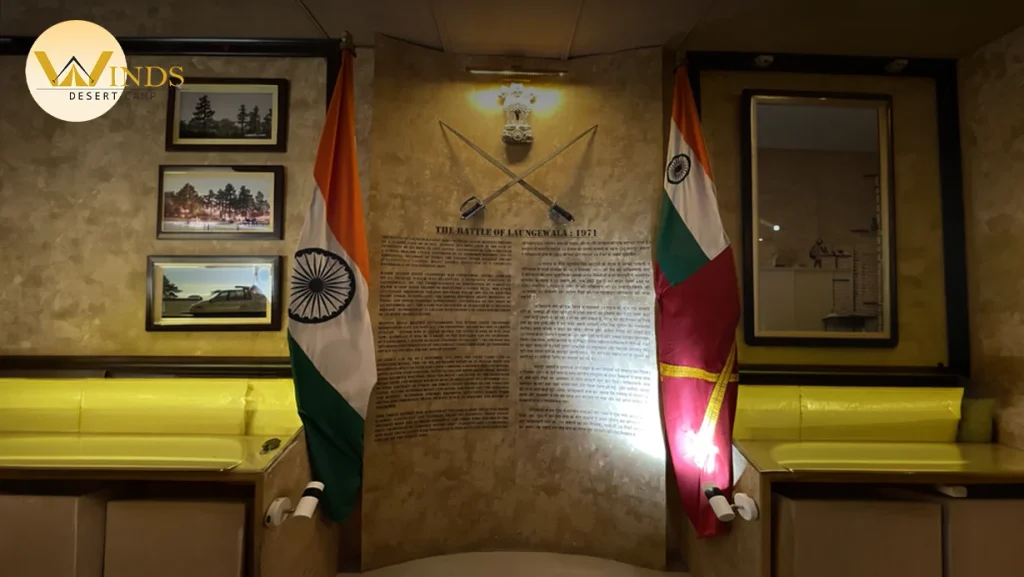
Most visitors who visit Jaisalmer have seen the 1997 Bollywood film Border. Few realise that the battle it depicts happened here within 120 kilometres of the city, on the edge of this same desert.
In December 1971, during the Indo-Pakistani War, a Pakistani armoured column of approximately 2,000+ soldiers and several dozen tanks crossed the border near Longewala in Rajasthan. Waiting for them: Charlie Company of the 23rd Battalion, Punjab Regiment — 120 Indian soldiers. The company at the post had no tanks of its own and relied on infantry weapons, mortars and 106-mm recoilless anti-tank guns. (Source: Link)
They held.
The Pakistani column could not advance without infantry support. Every attempt to move the tanks forward was met with concentrated fire from positions the Indian soldiers refused to abandon. By dawn, two Hawker Hunter aircraft from No. 122 Squadron, flying from Jaisalmer, arrived. Indian Air Force Hunters attacked the exposed Pakistani armour from dawn, destroying or disabling a large number of tanks and vehicles. Accounts differ on the exact number of Pakistani tanks destroyed or abandoned, with figures commonly reported in the mid-30s. (Source: Link)
That is what this museum commemorates. Jaisalmer was chosen because Longewala happened nearby, and because the desert sector’s military history belongs here.
Jaisalmer War Museum History
Inaugurated: August 2015
Inaugurated by: Lieutenant General Ashok Singh, General Officer Commanding-in-Chief, Southern Command
Conceptualised by: Lieutenant General Bobby Mathews
The museum was created to commemorate the Konark Corps, the Indian Army formation responsible for guarding India’s western desert frontier. The Konark Corps (named for the famous sun temple in Odisha, the corps’ emblem) defends the sector from the international border in Rajasthan’s Thar Desert. This museum is their institutional memory made accessible to civilians.
The 2015 inauguration date was not random; it marked 50 years since the 1965 Indo-Pakistani War, the golden jubilee of a conflict that saw intense desert sector operations. The museum covers both the 1965 and 1971 wars, with significant focus on the Longewala engagement.
Before this museum opened, most tourists visiting Jaisalmer had no access to this military history. The fort, the havelis, the dunes, but nothing that explained why the Indian Army is so deeply embedded in this region’s identity.
Jaisalmer War Museum Timings
Commonly cited timings: 9:00 AM to 6:00 PM, daily.
An honest note: competing sources give conflicting information. Some report split timings of 8:00 AM to 1:00 PM and 4:00 PM to 8:00 PM. Since this is an Indian Army-managed facility, timings can change based on military operations, national events, or administrative decisions without public notice.
Practical advice:
- Arrive before 11:00 AM – this gives you time for the full museum, the outdoor exhibits, and the audiovisual hall before the heat becomes a factor in summer months
- Closed on certain national holidays – confirm before travelling
- For current timings, call the museum directly: +91-91161 13959 (Source: Link)
Jaisalmer War Museum Ticket Price
Conflicting data exists here too, across published sources. The most commonly cited figures for the war museum Jaisalmer prices are:
- Adults: ₹30 per person (For Adults and Children)
- Camera/video fee: Charged separately — confirm the exact amount at the ticket counter
Some sources report lower fees or free entry. Given that this is an Army-managed museum with no consistent official public pricing page, treat any published figure as a starting point and verify at the gate.
What is consistent: The museum is affordable for all visitor types. Group discounts and school visit packages are available on request.
What to See Inside: Exhibits and Attractions
Allow 1.5 to 2 hours for the full visit, including the audiovisual presentation.
Longewala Hall
The central exhibition. Dedicated maps, photographs, first-person accounts, and combat equipment from the 1971 battle. The maps alone tell the story — the column’s approach route, the Indian defensive positions, the dawn air strike zones. Read the plaques slowly. They carry names.
Indian Army Hall
Broader military history of the desert sector — combat tactics, the strategic importance of Rajasthan’s border with Pakistan, and the operations that shaped the region. Less emotionally immediate than Longewala Hall but essential context.
Audiovisual Hall
A film on the Battle of Longewala runs here — approximately 20 minutes. This is the section most visitors find most affecting. Watch it before touring the outdoor exhibits if you can — it gives everything outside a different weight.
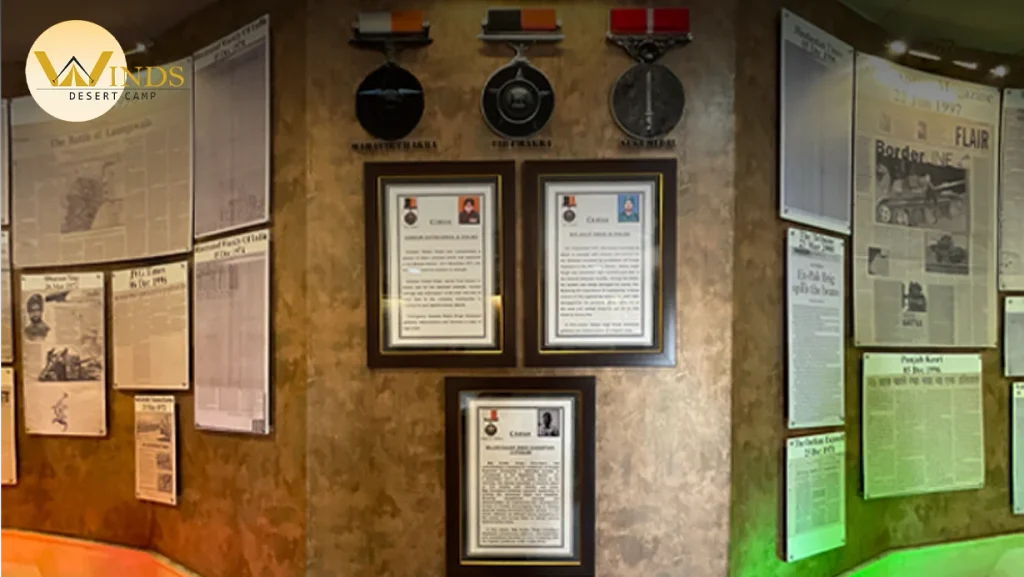
The Amar Chakra (Honour Wall)
The wall of honour. Names of soldiers who gave their lives in the desert sector conflicts. Stand here quietly. Speak at a low volume. This is not a photographic opportunity. It is a record of what protecting a border costs.
Outdoor Exhibits — The Machines That Fought
Hawker Hunter aircraft: This is the type of aircraft that arrived at Longewala at dawn on 5 December 1971 and began destroying Pakistani tanks. Two Hunters from No. 122 Squadron, flying from Jaisalmer, turned the battle. The aircraft on display is a retired operational machine of the same type. Stand under its wing. Think about what it did.
T-55 tanks: The museum displays a T-55 tank as part of its collection of military equipment. It should not be confused with the main Pakistani armoured vehicles used at Longewala, which are generally identified in historical accounts as Chinese Type 59 tanks and Sherman tanks. (Source: Link)
Artillery and armoured vehicles: Multiple pieces from different conflict periods, each with accompanying descriptions.
Don’t Miss the Jaisalmer War Museum Light and Sound Show
Critical advisory before anything else:
Published listings currently advertise the Jaisalmer War Museum light and sound show, but schedules can change. Confirm the day’s show timing and availability before making a separate evening trip. Military-run evening shows in Rajasthan are subject to suspension or schedule changes without public notice or website update. Do not plan an evening visit exclusively for the show without same-day confirmation. When you arrive in the morning, ask at the ticket counter whether the show is running, what time it starts, and whether separate tickets are required.
What the show covers when operational:
The show narrates India’s desert border defence, specifically the events of 1971 and the Battle of Longewala, through illuminated visuals set against the outdoor exhibits, with narrated audio and patriotic music. The outdoor setting after dark, with aircraft and tanks lit against the Jaisalmer sky, is a different experience from the daytime visit.
Language:
Hindi narration is standard. English availability should be confirmed on the day.
Planning approach:
Visit the museum fully during the day, return to camp, then come back for the evening show after confirming it is running. The daytime visit is essential — the show alone is not sufficient.
Practical Visitor Guide
Time required:
1.5 to 2 hours for the full museum, including outdoor exhibits and audiovisual hall.
Photography:
- Generally permitted in outdoor exhibit areas
- Restrictions may apply inside specific halls – follow signage and Army personnel instructions
Facilities: Parking available. Cafeteria availability varies – carry drinking water, particularly April through June.
Best time of day:
- October to March: any time
- April to June: before 10:30 AM — outdoor areas become extreme by mid-morning
- Wear closed shoes for outdoor sections (sand and uneven surfaces)
Rules and Etiquette
Government ID:
- Indian citizens: Aadhaar, Voter ID, Driving Licence, or Passport
- Foreign nationals: passport without exception
- ID may be required at entry — carry it
Prohibited items:
- Drones are strictly prohibited at all Indian military establishments – do not bring one
- Large bags may require a deposit at entry – travel light
- When in doubt about any item, leave it in the vehicle
Restricted zones: Certain areas may be off-limits. Follow all signage and Army personnel instructions without question.
At the Amar Chakra: This is a memorial. Keep voices low. Follow on-site guidance on photography.
How to Reach the Museum from Sam Sand Dunes
For visitors staying at any Camp in Jaisalmer near Sam Sand Dunes, the route to the museum is different from what city-based travel guides describe.
Important clarification: The museum is located on NH-11 (Jodhpur Highway), on the opposite side of Jaisalmer city from Sam. You cannot reach the museum from Sam without driving through or around the city. There is no direct Sam-to-museum route.
Route from Sam Sand Dunes:
- Drive approximately 40 km east from Sam into Jaisalmer city
- Exit Jaisalmer heading north-east on NH-11 (the Jodhpur road, not the Barmer road)
- Continue approximately 10 km from the city boundary
- The museum is on the left side of the highway
Total distance from Sam: approximately 50 km
Drive time: 1.5 to 2 hours depending on Jaisalmer city traffic (morning traffic can add 20–30 minutes)
Transport options:
- Private taxi arranged through your camp: most reliable, able to wait while you visit
- Self-drive: straightforward on NH-11 once clear of city traffic
- Auto-rickshaw: only practical from Jaisalmer city centre, not from Sam
Tip: Combine with Jaisalmer Fort on the same day. Visit the museum first in the morning, then the Fort in the afternoon; they are on opposite sides of the city, so this routing uses your drive through the city productively in both directions.
Best Time to Visit Jaisalmer War Museum
| Season | Conditions | Recommendation |
| October–February | Comfortable, 15–25°C | Best overall; arrive any time |
| March–April | Warming, 25–35°C | Morning visits only after late March |
| May–June | Extreme heat, 40–48°C | Before 10 AM only; carry water |
| July–September | Monsoon, 30–38°C humid | Museum accessible; outdoor areas slippery; check road conditions from Sam |
Peak season (November–January): Museum sees highest visitor volumes. Arrive before 10 AM to have outdoor exhibits relatively uncrowded.
Combining the Museum with Your Jaisalmer Itinerary
From Camp in Jaisalmer – 2-night recommended placement:
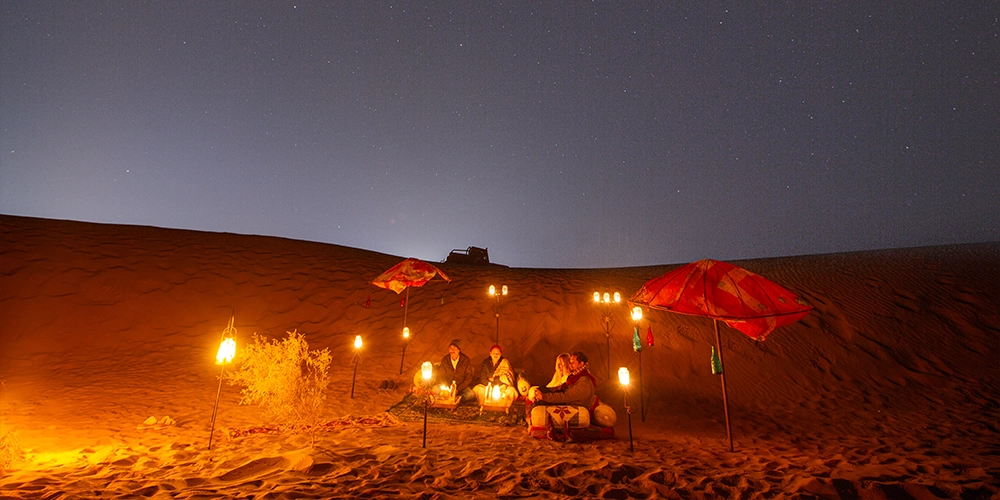
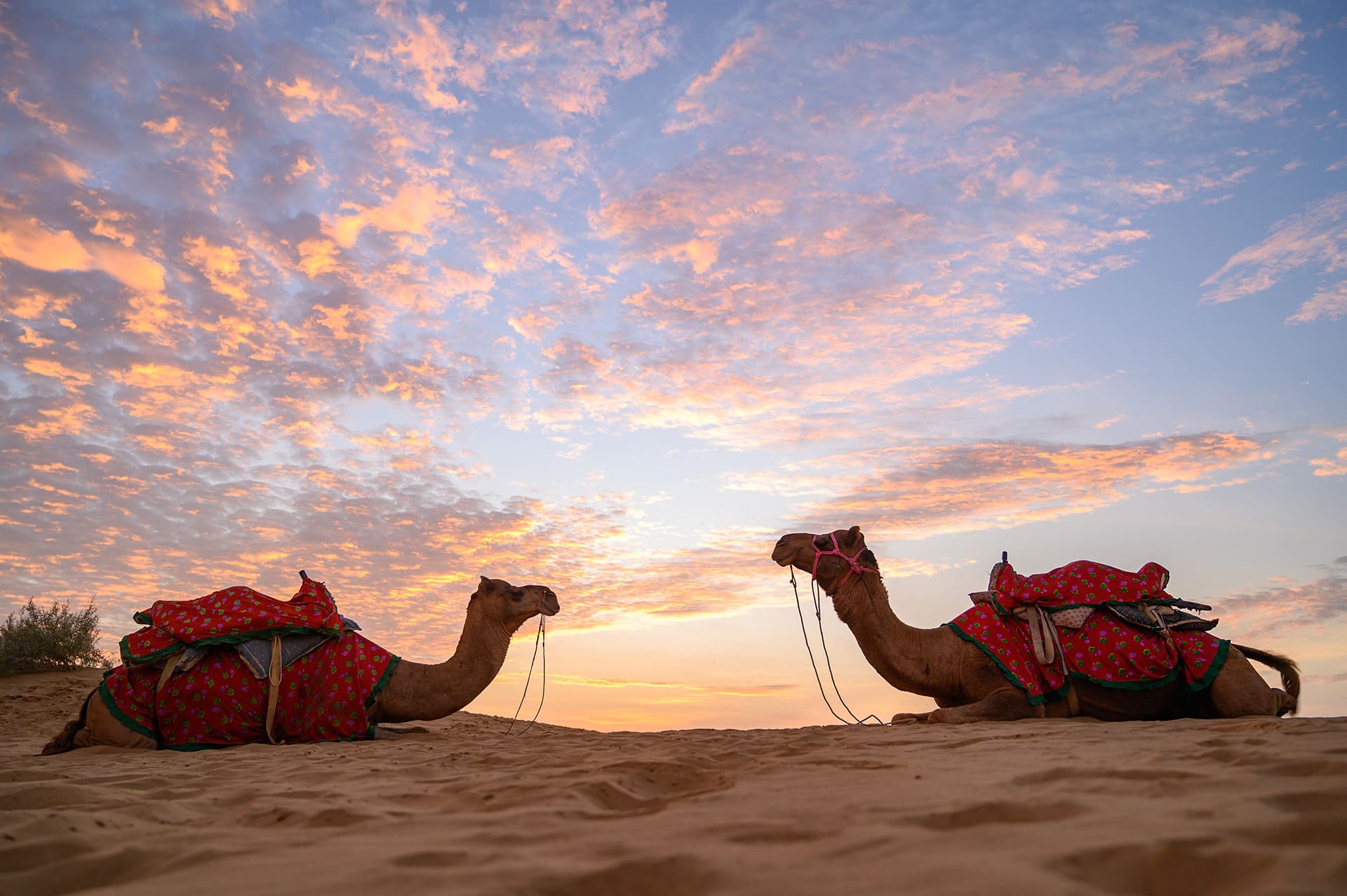
- Day 1: Arrive, Sam → check in → camel safari at sunset → Rajasthani dinner → stargazing on private dunes
- Day 2: War Museum morning → Jaisalmer Fort afternoon (opposite sides of city — efficient routing) → return to camp → folk music evening
- Day 3: Morning at camp → check out → departure
For 3-night stays:
Add Tanot Mata Temple as a full-day extension. Located approximately 120 km from Jaisalmer in the same NH-11 direction as the museum, Tanot Mata Temple is directly linked to the 1971 war; Pakistani bombs fell on the temple premises and failed to explode. The BSF has maintained it since. A Tanot visit creates a coherent military heritage arc across the trip.
Stay at Winds Desert Camp – Your Perfect Jaisalmer Desert Camp
The Jaisalmer War Museum visit starts the night before with a clean camp, a proper dinner, and enough rest for an early start. Winds Desert Camp at Sam Sand Dunes puts you in the right position: the private dunes for the desert experience, and a straightforward drive to everything Jaisalmer holds.
25 tents, including AC king tents and cooler tents, across 3 acres of private dunes. 500 feet of dune frontage, the kind that gives you a sunset without a crowd. Activities include camel safari, cultural evenings, and dune experiences specific to the Sam Sand Dunes area.
Rated on TripAdvisor Travellers’ Choice and Agoda Gold Circle Certificate.
FAQs
Q. What is the Jaisalmer War Museum and what does it commemorate?
Ans. The Jaisalmer War Museum is an Indian Army-managed military heritage site inaugurated in August 2015 to honour the soldiers of the Konark Corps who defended India’s western desert frontier, particularly during the 1965 and 1971 Indo-Pakistani Wars. Its central focus is the Battle of Longewala (December 1971), in which 120 Indian soldiers held a Pakistani armoured column of 65+ tanks through an entire night until Indian Air Force Hunter aircraft arrived at dawn and destroyed the column. The museum houses tanks, aircraft, artillery, photographs, personal relics, and an audiovisual hall.
Q. What are the Jaisalmer War Museum timings and entry fee?
Ans. The most commonly cited timings are 9:00 AM to 6:00 PM daily. Some sources report split timings of 8:00 AM to 1:00 PM and 4:00 PM to 8:00 PM. Entry fees most commonly cited are ₹30 for adults and children, though some sources report different or free entry. Camera fees are charged separately. Given the conflicting data across published sources, visitors are strongly advised to confirm current timings and fees directly at +91-91161 13959 before travel.
Q. What is the light and sound show at Jaisalmer War Museum?
Ans. The light and sound show narrates the story of India’s western border defence through illuminated visuals set against outdoor exhibits, with audio narration and music. It operates seasonally, and schedules change without consistent public notice. Do not plan a separate evening visit for the show without confirming its availability at the ticket counter on the morning of your visit. When operational, the show runs in the evening after the museum’s daytime hours.
Q. How far is the Jaisalmer War Museum from Sam Sand Dunes?
Ans. Approximately 50 kilometres, via Jaisalmer city. From your Jaisalmer Desert Camp at Sam Sand Dunes, you drive east into Jaisalmer (40 km), then continue north-east on NH-11 (Jodhpur Highway) for approximately 10 km beyond the city. The museum is on the left side of the highway. Drive time is 1.5 to 2 hours depending on city traffic. There is no direct route from Sam to the museum without passing through Jaisalmer city.